

If you’re a busy adult juggling work, family, and everything in between, chances are you’re trying to squeeze workouts into an already packed schedule. That’s a great start, but here’s...
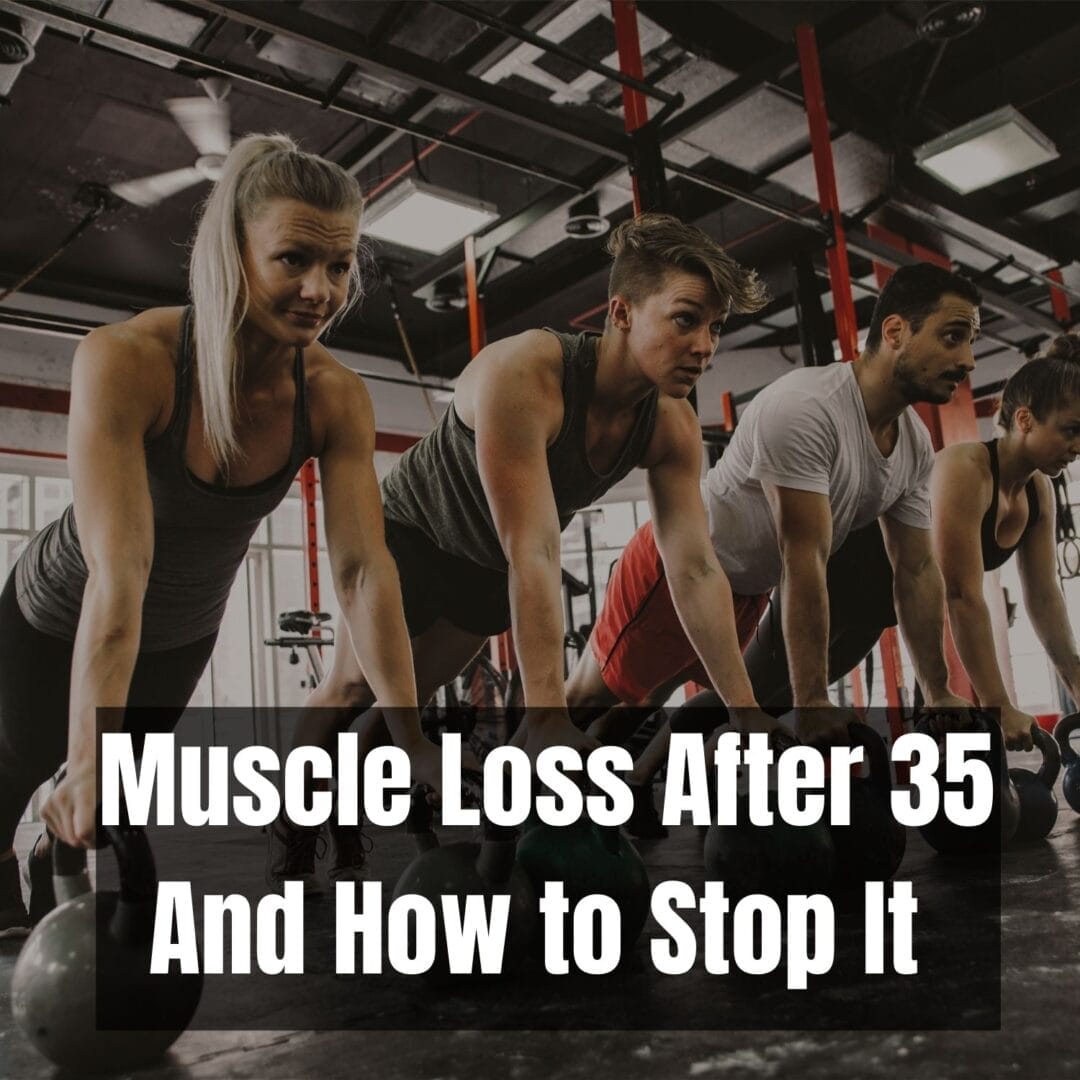
Muscle Loss After 35 – And How to Stop It
Most people don’t notice muscle loss when it starts.
They just notice:
- The scale creeping up
- Clothes fitting tighter
- Strength numbers stalling
- Recovery taking longer
- Energy dipping
Here’s what’s really happening.
After age 30–35, adults begin losing muscle mass naturally, a process called sarcopenia. Without resistance training, you can lose 3–8% of muscle per decade, and that rate increases after 40.
Less muscle doesn’t just mean “less tone.”
It means a slower metabolism, reduced strength, higher injury risk, and decreased resilience.
The good news?
Muscle loss is preventable.
Why Muscle Loss Happens After 35
There are three main drivers:
1. Decreased Training Intensity
Many adults become less consistent with strength training due to career demands, family, or injuries.
2. Hormonal Changes
Testosterone, growth hormone, and recovery capacity gradually decline.
3. Sedentary Lifestyle
More sitting. Less loading. Less stimulus for muscle to stay.
Your body adapts to what you demand of it.
If you don’t demand strength, you lose it.
Muscle loss is preventable.
Where High-Intensity Training Fits In
There’s a misconception that once you hit your mid-30s, you should stop pushing intensity.
That’s not true.
High-intensity functional training, like CrossFit, can be one of the best tools for preserving muscle mass, because it combines:
✔ Progressive strength training
✔ Olympic lifting and compound movements
✔ Metabolic conditioning
✔ Functional, full-body loading
You’re not just doing “cardio.”
You’re lifting, pulling, squatting, pressing, and sprinting… often in the same session.
That combination stimulates muscle retention while also improving cardiovascular health.
Intensity isn’t the enemy.
Lack of strength stimulus is.
Why Muscle Still Declines for Some People
Even in high-intensity programs, muscle loss can occur when:
- There’s no progressive overload
- Recovery is ignored
- Nutrition (especially protein) is insufficient
- Training becomes random instead of structured
Intensity works best when it’s supported by intelligent programming.
That’s where smart coaching matters.
How to Preserve (and Build) Muscle After 35
1. Prioritize Strength Within Your Training
Make sure your program includes:
- Heavy compound lifts
- Progressive loading
- Structured strength cycles
Intensity should enhance your strength, not replace it.
2. Eat Enough Protein
As we age, we require more protein to maintain muscle.
Aim for roughly 0.7–1g per pound of bodyweight depending on activity level.
3. Respect Recovery
Sleep, hydration, mobility, and stress management are no longer optional.
You don’t need less intensity.
You need better balance.
The Bigger Picture
After 35, the goal isn’t to “slow down.”
It’s to train in a way that lets you:
- Keep pushing hard
- Maintain lean muscle
- Protect your joints
- Stay metabolically healthy
- Perform at a high level for decades
The right mix of strength + conditioning is powerful.
And when done correctly, high-intensity functional training can be one of the best defenses against muscle loss.
Ready to Train for the Long Game?
If you’re 35+ and want to:
- Maintain your strength
- Improve body composition
- Stay competitive
- Train hard without burning out
You don’t need to abandon intensity.
You need smart programming and expert coaching.
At The V Fit, we build strength-driven programs inside our CrossFit and small group training environment, so you can train hard today and still be strong at 55, 65, and beyond.
Click here to book a Consult and let’s build muscle that lasts.

